 DirectToGrowth Co.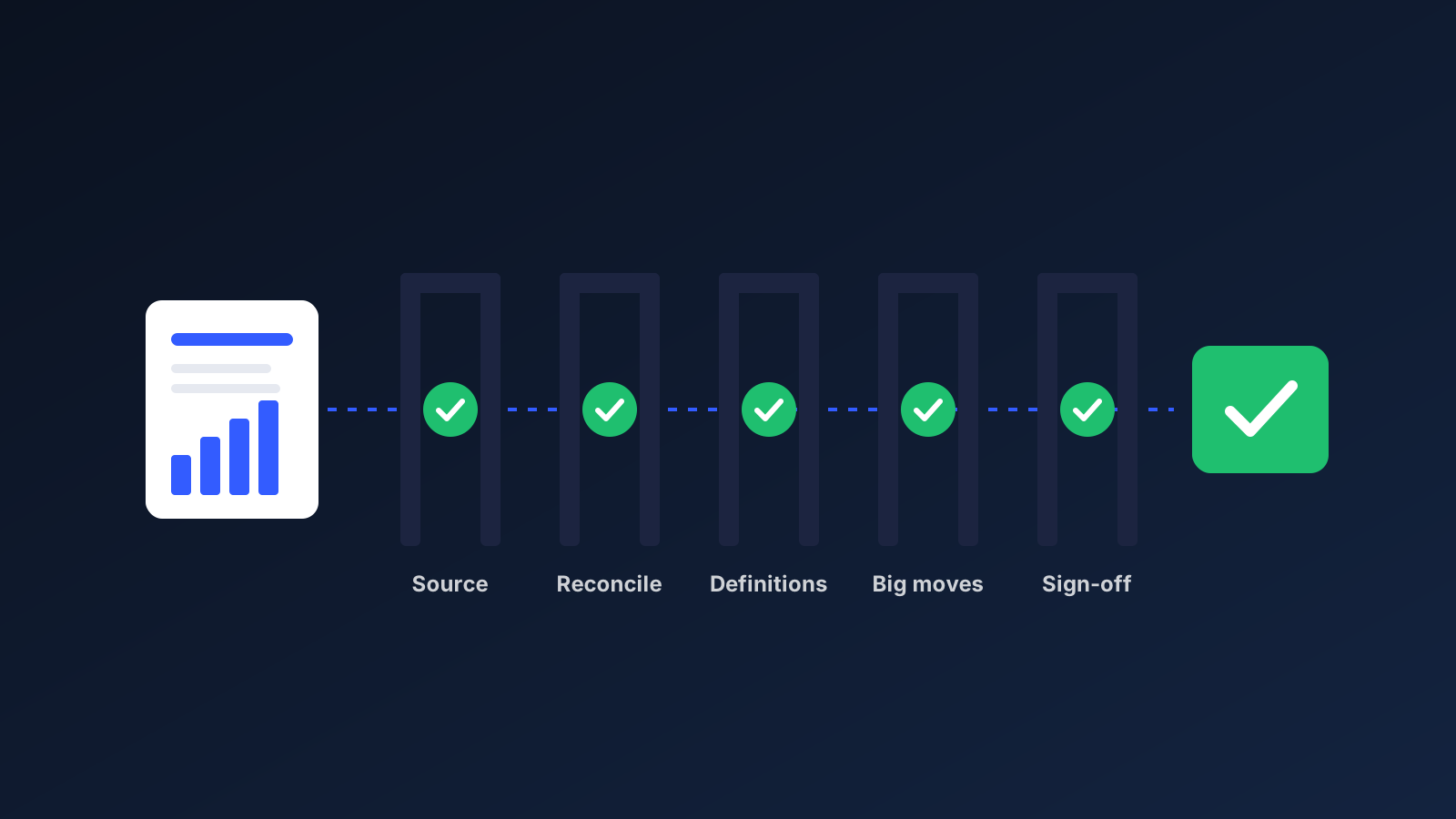
Every Monday morning an AI agent pulls numbers from Shopify, the ad platforms, email and the books, and builds a weekly business review before I've finished my coffee. It used to take half a day. Now it takes minutes.
It also, early on, told a client their revenue was up 18% in a week when it was actually flat. The agent had counted a batch of wholesale invoices as online orders. The chart looked beautiful. The number was wrong.
AI doesn't make your reporting less accurate. It makes wrong numbers look exactly as confident as right ones.
So nothing goes to anyone until every number has passed five gates. Here's the system.
Gate 1: Every number ties to a source
Each figure in the review must link back to where it came from — the store export, the ad account, the ledger — with the date range and filters used. If the agent can't say where a number came from, the number doesn't ship. This alone catches most problems, because it forces the question "which revenue?" before it becomes a headline.
Gate 2: The totals reconcile
Channel numbers have to add up to the total, and the total has to match the system of record within a set tolerance. Revenue by channel should sum to store revenue. Ad spend across platforms should match what the books show was charged. When the gap is bigger than a couple of percent, the agent has to explain it before anything else happens.
Gate 3: Definitions don't drift
"Revenue" can mean gross sales, net of discounts, net of returns, with or without shipping and tax. "New customer" can mean first order ever or first order this year. Write the definitions down once, in plain language, and give them to the agent every single week. Then check that this week's numbers were built the same way as last week's. A metric that quietly changes definition is worse than no metric at all.
Gate 4: Big moves get a second look
Set thresholds. Any metric that moves more than, say, 15% week over week gets flagged automatically, and the agent has to find a cause in the underlying data — a sale, a stock-out, a tracking change or a big wholesale order. "Revenue up 18%" with no identifiable reason is not good news. It's a question.
Gate 5: A human signs off on the story
The agent drafts the numbers and the narrative. A person who knows the business reads it and signs off before it's sent. Not to recheck every cell — the first four gates do that — but to ask whether the story makes sense. Does it match what the team saw in the week? The judgment stays human.
Four failures I watch for every week
1. Double counting
The same order shows up in two sources — once from the store, once from an ad platform's conversion report — and gets added together. Platform-attributed revenue should never be summed with store revenue.
2. Mismatched date ranges
One source runs Monday to Sunday, another Sunday to Saturday, and a third is in a different time zone. Every comparison quietly breaks. Lock the week definition and time zone for every source.
3. Confident filler
When data is missing, a language model will happily fill the gap with something plausible. Tell the agent explicitly to write "data unavailable" instead — and treat any number without a source as invented until proven otherwise.
4. Commentary that's true but useless
"Revenue increased due to higher sales" is technically correct and tells you nothing. Require every comment to name a specific driver from the data — a campaign, a product, a channel — or not appear at all.
How to set it up
Write one page of metric definitions and the source of truth for each.
Make source links and reconciliation checks part of the agent's instructions, not an afterthought.
Set week-over-week thresholds that trigger an explanation.
Keep a log of every correction — it's the fastest way to improve the instructions.
Name the human who signs off, and don't send until they do.
Here's the reframe. The value of AI in reporting isn't speed. It's that you can afford to check everything. The half-day you used to spend building the review now goes into making sure it's right. That's a better trade than any dashboard I've ever bought.