 DirectToGrowth Co.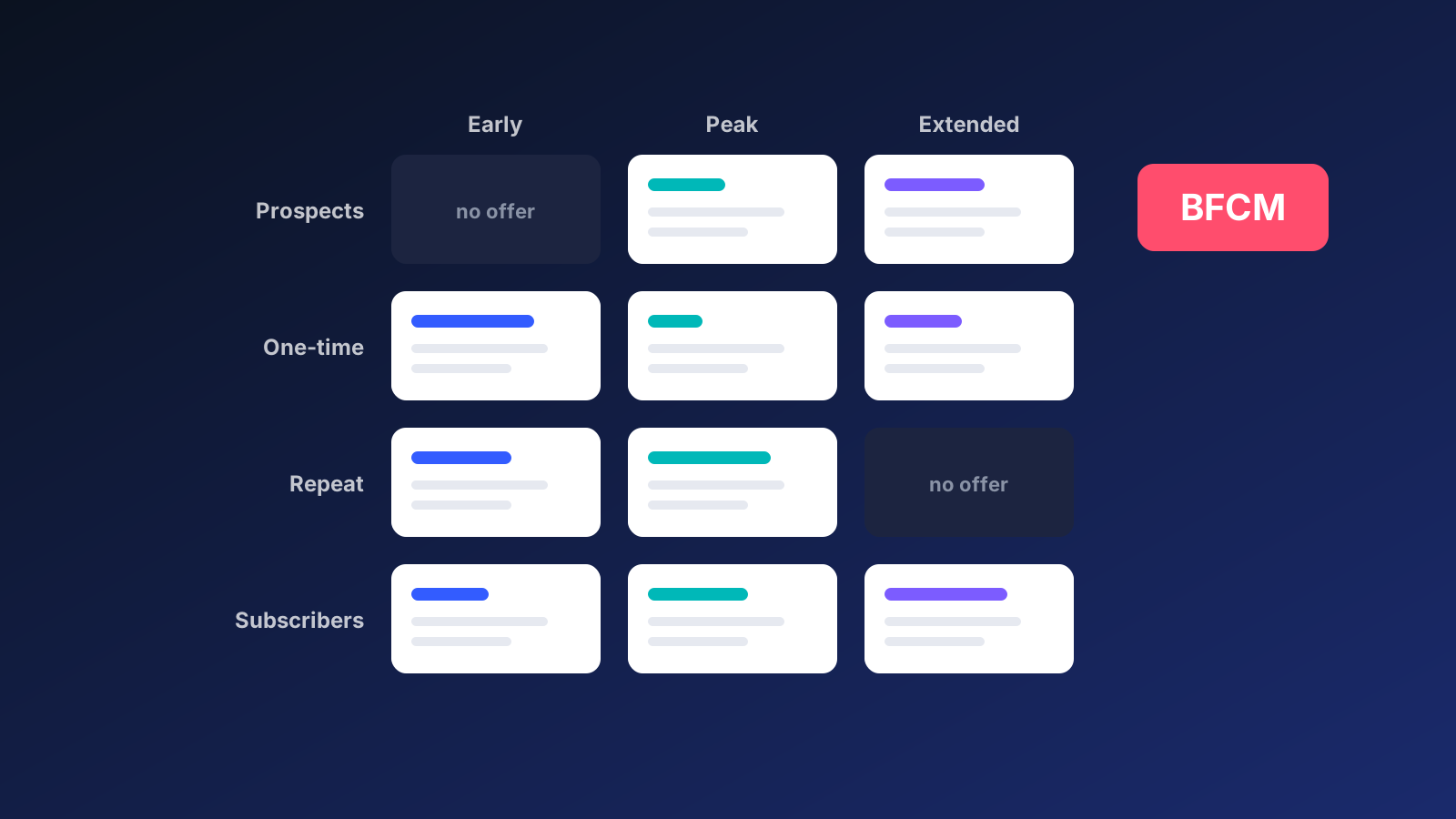
Every October I get the same message from founders: "What's our Black Friday offer?" Singular. One number. Usually 25% or 30% off sitewide, because that's what it was last year and nobody wants to be the one who blinked.
Here is the problem with that question. A single offer treats four very different customers exactly the same. The person who has never heard of you, the person who bought once in March, your best repeat buyer and the subscriber who already pays you every month all see the same banner and get the same discount. One of those people needed the push. The other three are a margin donation.
Black Friday isn't one offer. It's twelve decisions you're currently making by accident.
The grid: three periods, four customers
I plan BFCM as a grid. Down the side, four customer types. Across the top, three periods. Every box gets its own decision — and "no offer" is a valid decision.
| Early access (week before) | Peak (Thu–Mon) | Extended (Tue–Sun after) | |
|---|---|---|---|
| Prospects never bought | Content and list-building. Collect emails, no discount yet. | Your headline offer. This is where the discount earns its keep. | Last-chance version, smaller, to cold audiences who engaged. |
| One-time buyers | Early access to the second-product offer, not the hero. | Bundle or "complete the set" built around what they bought. | Shipping-deadline nudge. Gift angle. |
| Repeat buyers | VIP early access. Access is the perk — not a bigger discount. | Gift with purchase or a limited product, at full price where possible. | Nothing. Leave them alone. |
| Subscribers | Thank-you: free add-on in the next box. | Gift subscription or prepay offer. Never discount the existing sub. | Referral push. They are your best acquisition channel this week. |
Twelve boxes looks like more work. It is less work than explaining in January why revenue was up 40% and contribution margin was down.
Why the single offer quietly loses money
Run the arithmetic on a simple example. Say your average order is $80, gross margin is 65%, and you run 30% off sitewide. A full-price order makes $52 in gross profit. A discounted order makes $28. You need nearly two discounted orders to replace one full-price order — before ad costs and before returns.
Now look at who actually bought. In most accounts I audit, a large share of Black Friday revenue comes from people who already know the brand: past buyers, email subscribers and people who had the product in their cart in October. Many of them would have bought at full price in November or December anyway. You didn't create that demand. You pulled it forward and paid 30% for the privilege.
The prospects are the only box where a deep discount is doing new work. That's where the offer belongs.
The four rules that protect profit
Rule 1: Set a contribution-margin floor before you set the offer
Decide the minimum dollars of contribution each order must leave after product cost, shipping, payment fees and an allowance for returns. Then work backwards to the deepest discount you can afford by product. Some SKUs can carry 30% off. Some can't carry 15%. A sitewide number ignores that, which is how brands end up running their lowest-margin product as the doorbuster.
Rule 2: Separate the ad budget by customer type
If your prospecting campaigns can spend on past buyers, they will. Retargeting and existing customers convert cheaply, so the algorithm drifts toward them and your "new customer" ROAS looks brilliant. Exclude customer lists from prospecting, run retention through email and SMS where it costs almost nothing, and judge prospecting only on new customers.
Rule 3: Give your best customers access, not discounts
Your repeat buyers don't need 30% off to buy. They need to feel like insiders. Early access, a limited colourway or a gift with purchase does that and protects price perception. The deepest discount should never go to the people most willing to pay full price.
Rule 4: Decide the end date and keep it
"Extended" sales that run into mid-December teach customers that your prices are fake. Pick the window, put the date on the creative and end it. The brands with the best Januarys are the ones who didn't spend December discounting.
How to build your grid this week
Pull last year's BFCM orders and tag each one: new customer, one-time buyer, repeat buyer or subscriber. Look at how much revenue came from people who already knew you.
Set a contribution-margin floor per order and calculate the maximum discount by product, not sitewide.
Fill in the twelve boxes. Write "no offer" in at least two of them.
Build exclusion lists so prospecting spend only reaches prospects.
Put the end date on every piece of creative before anything goes live.
Here's the reframe. The goal of Black Friday isn't the biggest revenue weekend of the year. It's the most new customers you can acquire profitably. Twelve boxes gets you there. One offer just makes the weekend loud.