 DirectToGrowth Co.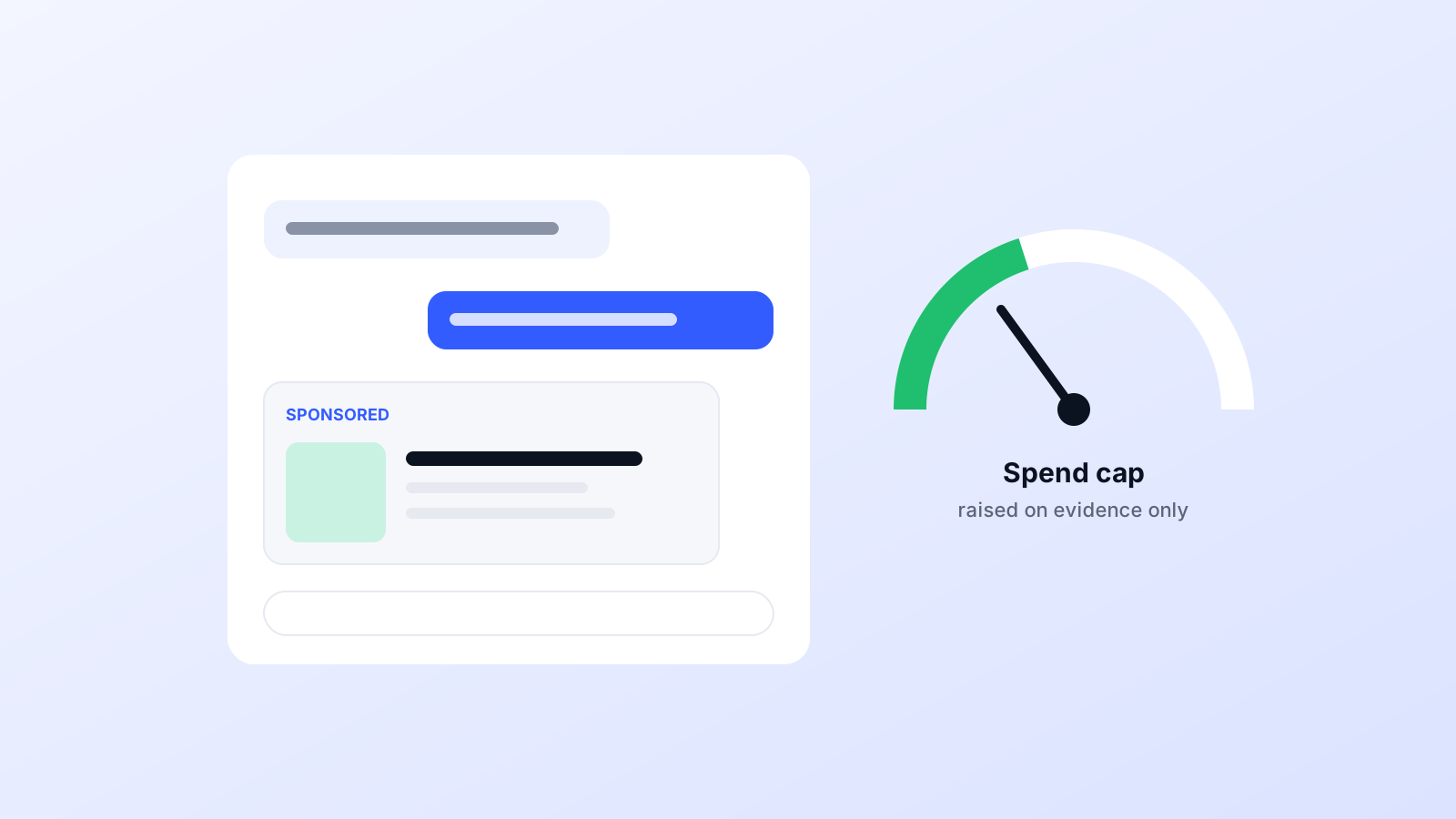
ChatGPT ads went self-serve and my inbox filled up overnight. Founders asking if they should move budget. Agencies pitching "AI search packages." Screenshots of early ROAS that look too good to be true.
I'm not against the channel. Being in front of someone at the exact moment they're asking an assistant which product to buy is a genuinely new kind of intent. But I've watched this movie before — with Pinterest, with TikTok, with Performance Max — and it always goes the same way. The new channel is easy to buy, the reporting is generous, and the budget scales faster than the proof.
A new channel doesn't need a bigger budget. It needs stricter rules than your old ones.
Why new channels always look better than they are
Three things make a brand-new ad platform look brilliant in month one.
Generous attribution. New platforms want you to stay. Default windows tend to be wide, view-through credit is often on, and the platform counts conversions it was near rather than conversions it caused.
Existing-customer leakage. Your past buyers ask ChatGPT about your brand too. If the platform can serve them an ad right before they buy something they were going to buy anyway, it will — and it will take the credit.
Thin data. At low spend, a handful of lucky orders makes the numbers swing wildly. A 6x ROAS on $800 of spend tells you almost nothing.
None of that is unique to ChatGPT. It's what every new channel does. The answer is the same every time: put guardrails on before the budget goes up, not after.
Rule 1: Hard spend caps, raised on evidence only
Start with a fixed test budget you'd be comfortable losing entirely — I usually suggest 3–5% of monthly paid spend, capped in dollars. Then write down, before launch, exactly what has to be true to earn the next step up.
For example: "We double the cap when we have at least 50 click-attributed new-customer orders at a CAC within 20% of our Meta prospecting CAC, sustained for three weeks." Specific, measurable and decided in advance — so nobody gets talked into scaling by a good Tuesday.
Rule 2: Clicks-only attribution while you're learning
Turn off view-through credit for the test period, or ignore it in your reporting if you can't. Use a short click window. Then compare the platform's number to what Shopify and your analytics actually saw from that traffic source.
If the platform claims 120 conversions and your store saw 40 orders with that UTM, you have your answer about how much to trust the dashboard. I'd rather under-credit a channel for two months than over-credit it for a year.
Rule 3: Exclude your customers from day one
Upload your customer list as an exclusion if the platform allows it. If it doesn't, judge the channel only on new-customer orders by matching emails or order tags on the back end. A new channel's job is to find people you couldn't reach elsewhere. Re-selling to your own customers isn't growth — it's paying a toll on revenue you already had.
Rule 4: Measure the lift, not the ROAS
The real question is whether total new-customer revenue went up when this channel turned on. The cleanest way to answer it is a holdout: run the channel in some regions and not others, or pause it for two weeks and watch what happens to new-customer orders overall. If nothing moves when you switch it off, the channel was harvesting, not creating.
What I'd actually test first
Comparison and "best X for Y" questions. This is where conversational intent beats a search results page — the buyer is mid-decision.
One hero product, one clear landing page. Don't send this traffic to a homepage. Match the page to the question that triggered the ad.
Plain, factual creative. The surface rewards answers, not hype. Specs, proof and price beat slogans.
The pre-launch checklist
Set a dollar cap and write down the evidence needed to raise it.
Switch reporting to clicks-only with a short window.
Upload customer exclusions, or plan to judge on new-customer orders only.
Tag every link with clean UTMs and reconcile weekly against store data.
Plan a holdout before you plan a scale-up.
Here's the honest version. The brands that win new channels aren't the ones who get in first. They're the ones who know first whether it's working. Make ChatGPT ads easy to test and hard to scale, and the budget will only go up when it's earned it.