 DirectToGrowth Co.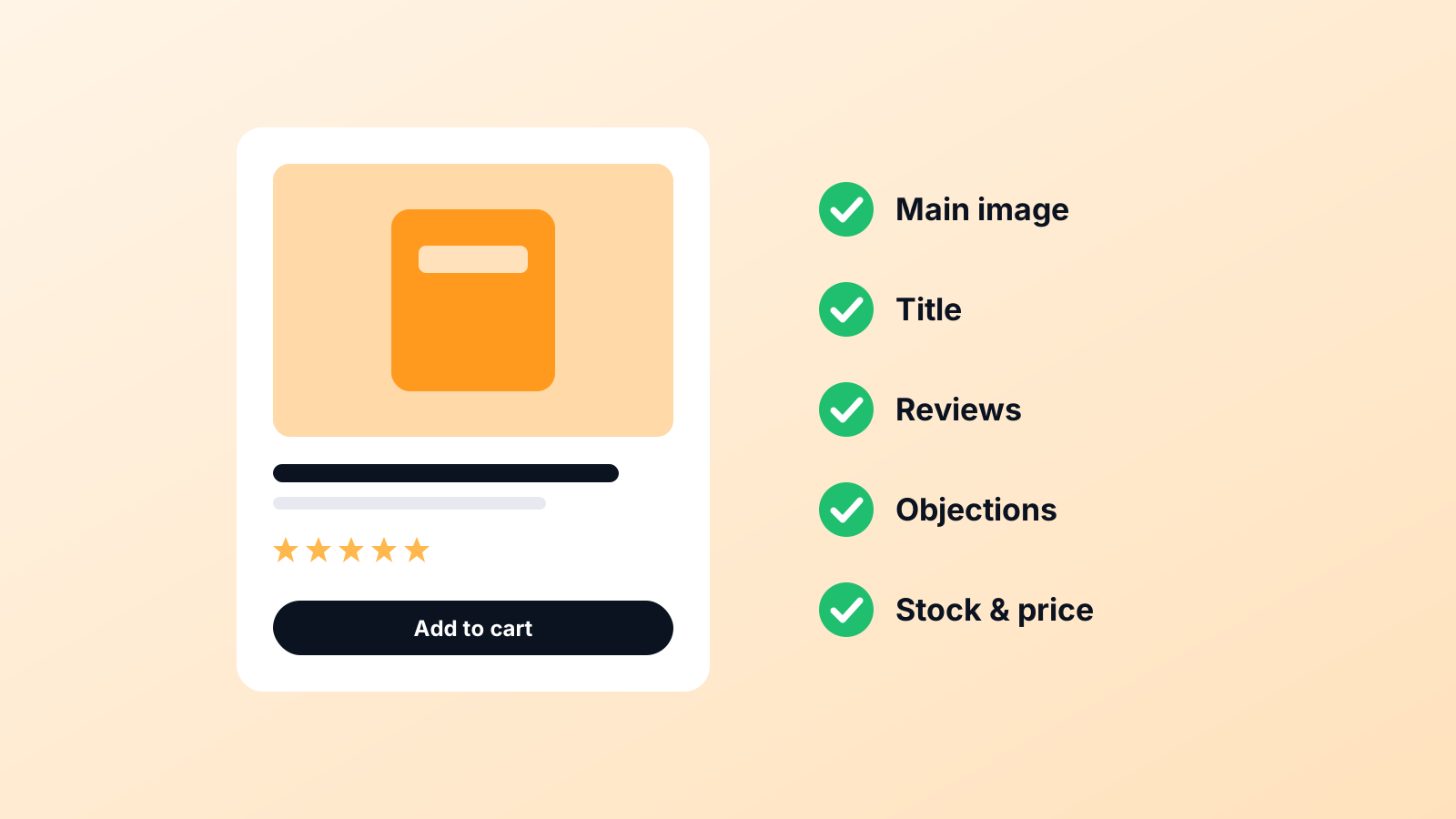
The call usually starts like this: "We just launched at a big retailer, the buyer wants us to spend on their ad platform, and sales are slow. How much should we put in?"
My answer is always another question. What does the listing convert at today? Most of the time, nobody knows. And that's the problem — because retail media doesn't fix a weak product page. It just sends more people to it, faster, at a higher cost.
Ads amplify a listing. If the listing is broken, you're paying to amplify the break.
Why retail media is so easy to overspend on
Retailer ad platforms are built to be easy. The retailer's team is often encouraging you to spend, the self-serve tools take minutes, and the reporting credits a lot of sales to ads — including shoppers who were already searching for your brand on that site.
Meanwhile, the thing that actually decides whether a click becomes a sale — the listing — is usually the least-loved asset in the business. Supplier images, a feature list copied from a spec sheet and no reviews. I learned this lesson running Amazon: the same ad budget can produce wildly different results depending on what's on the other side of the click.
Five listing checks before the bigger budget
1. The first image sells on a phone
Look at your main image at thumbnail size on a phone, next to the three competitors that show up for your main search term. Can a shopper tell what it is, how big it is and why it's better — in one second? If not, fix that first. It's the cheapest conversion lift you'll ever get.
2. The title answers the search
Your title should contain the words people actually type: product type, key attribute and size or count. Brand-first titles full of internal product names look nice to you and invisible to the search engine.
3. Reviews clear the threshold
Below a minimum number of reviews and a decent star rating, paid traffic converts poorly no matter how good the ad is. Use the retailer's review programs, sampling or post-purchase follow-up to build a base before you scale. Paying for clicks onto a listing with three reviews is paying for people to leave.
4. The content handles the objection
Every category has one objection that kills sales — size, compatibility, ingredients, how it compares. The secondary images and description should answer it directly. Read your one- and two-star reviews and your competitors'; the objection is usually sitting right there.
5. Stock and price are stable
If you go out of stock, the ads stop, the organic ranking you earned slips and you start again from lower down. If the retailer's price swings, your conversion rate swings with it. Don't scale spend into a supply chain or a price you don't control.
Three rules once the listing is ready
Rule 1: Structure by intent, not by product
Separate your campaigns into branded searches, category searches and competitor searches. Branded is cheap and mostly defensive. Category is where new customers come from. Competitor is a test that has to earn its place. Lumped together, branded sales make the whole account look efficient and hide whether you're winning anyone new.
Rule 2: Judge on incremental, not attributed
Retail platforms usually credit ads generously. Track the metric that matters: total units sold on that retailer and your organic rank on category terms. If ad-attributed sales go up but total sales are flat, ads are taking credit for sales you'd have made anyway.
Rule 3: Hold your price
Discounting to "boost velocity" at launch trains the retailer's algorithm and its shoppers to expect that price. A short, planned launch promotion is fine. A permanent markdown to make the ads work is a margin problem disguised as a marketing plan.
The pre-spend checklist
Measure the listing's current conversion rate from organic traffic.
Fix the main image, title and objection-handling content.
Get reviews above the category threshold.
Confirm weeks of stock cover and a stable shelf price.
Only then: launch campaigns split by branded, category and competitor intent.
Here's the reframe I give every brand launching at a retailer. Retail media is a multiplier, not a fix. Multiply a listing that converts at 2% and you get expensive disappointment. Multiply one that converts at 12% and you get a business. Fix the page first.