 DirectToGrowth Co.
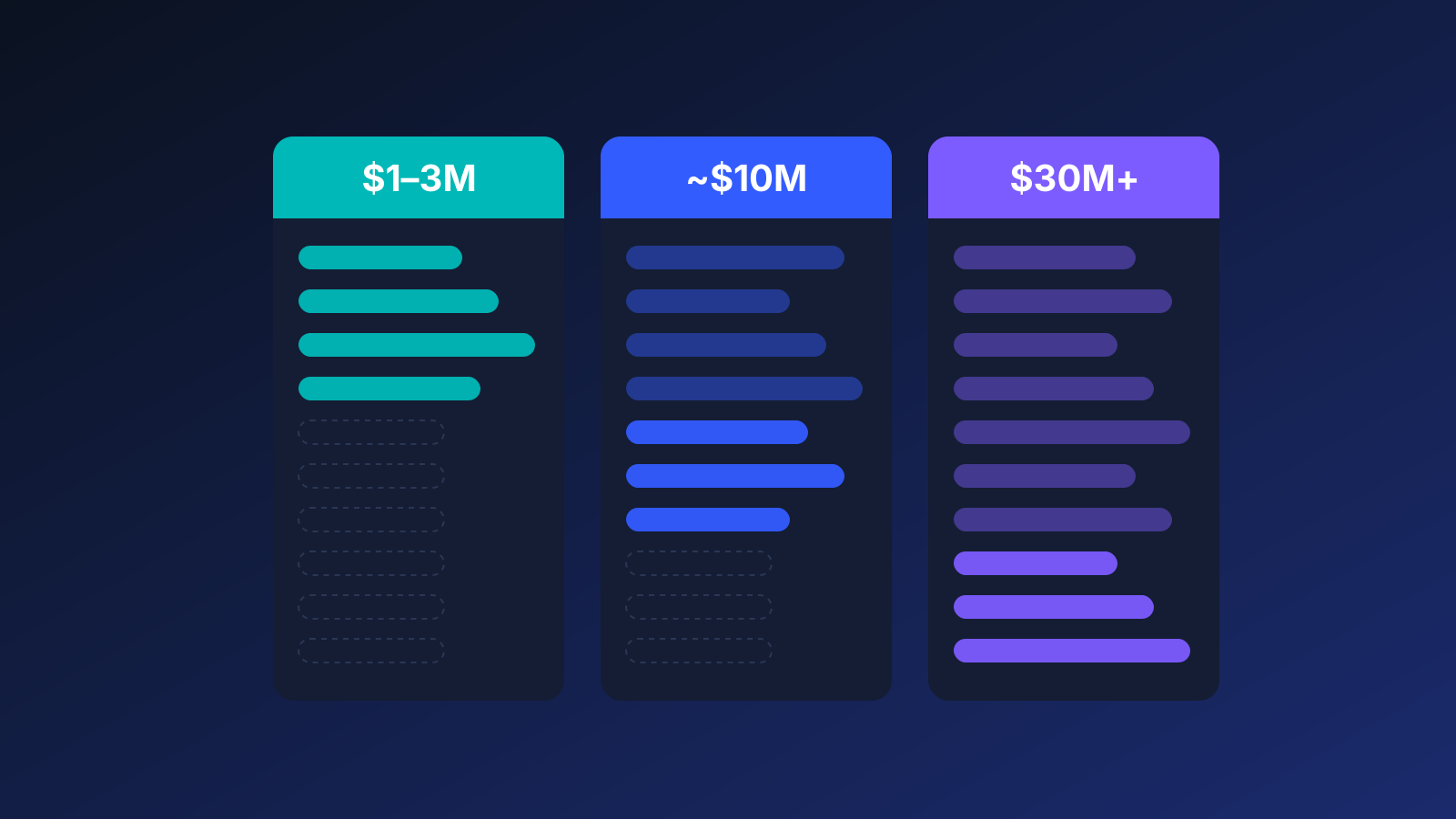
"What should our stack be?" is the wrong question. The right one is "what should our stack be right now?" A $2M brand running a $30M brand's stack is paying for software instead of growth. A $30M brand on a $2M stack is making decisions without the numbers to make them.
Here is the whole thing in one table. Not the only answer, but the one I would start from if you handed me a brand at each stage tomorrow.
| Category | Starter $1–3M | Scaling ~$10M | Mature $30M+ |
|---|---|---|---|
| Store | Shopify | Shopify, fewer apps | Shopify Plus |
| Email / SMS | Klaviyo email | + SMS | + dedicated retention owner |
| Reviews | One reviews app | Same app, syndicated | Same app, plus UGC in ads |
| Support | Shared inbox | Helpdesk (Gorgias or similar) | Helpdesk + tagged VoC reporting |
| Analytics | Shopify + GA4, checked | Same, plus a weekly KPI sheet | Warehouse + BI |
| Attribution | Platform data + blended numbers | + post-purchase survey | + MMM and quarterly holdouts |
| Testing | Not yet — not enough traffic | Landing page + offer tests | Always-on testing program |
| Creators | Gifting, tracked by hand | Affiliate platform | Creator program with its own P&L |
| Subscriptions | Only if replenishable | Subscription app | Subscription app + retention analytics |
| Data plumbing | Native integrations | Native integrations | ETL + warehouse; CDP if needed |
Three rules behind the table
Add a tool when a decision needs it, not when revenue crosses a number. If you are at $12M and nobody is asking a question that needs a warehouse, you do not need a warehouse yet.
Every tool has an owner. A name, not a team. If the owner leaves and nobody picks it up within a month, the tool goes on the cancel list.
Consolidate before you add. Before buying something new, check whether a tool you already pay for does 80% of it. Usually one does.
What I'd cut first
- The second tool doing the same job as the first.
- Anything bought for a launch or campaign that ended.
- Seats for people who no longer log in.
- Annual plans you'd never renew if they came up today.
What I'd add next
At almost every stage the answer is the same: a better way to know what is working. A post-purchase survey at $5M. A clean weekly KPI sheet at $10M, with blended new-customer CAC and marketing spend as a share of net revenue on the first line, because those are the numbers finance can hold. A holdout test at $30M, because by then the attribution tool's opinion is expensive and a geo test is cheaper than being wrong. The tools that answer "is this working?" pay for themselves faster than the tools that promise to make things work.
The stack is not the strategy. It is the plumbing for one. What I would tell a CEO: match the plumbing to the size of the house, make sure every pipe has a name on it, and spend the rest on growth.